

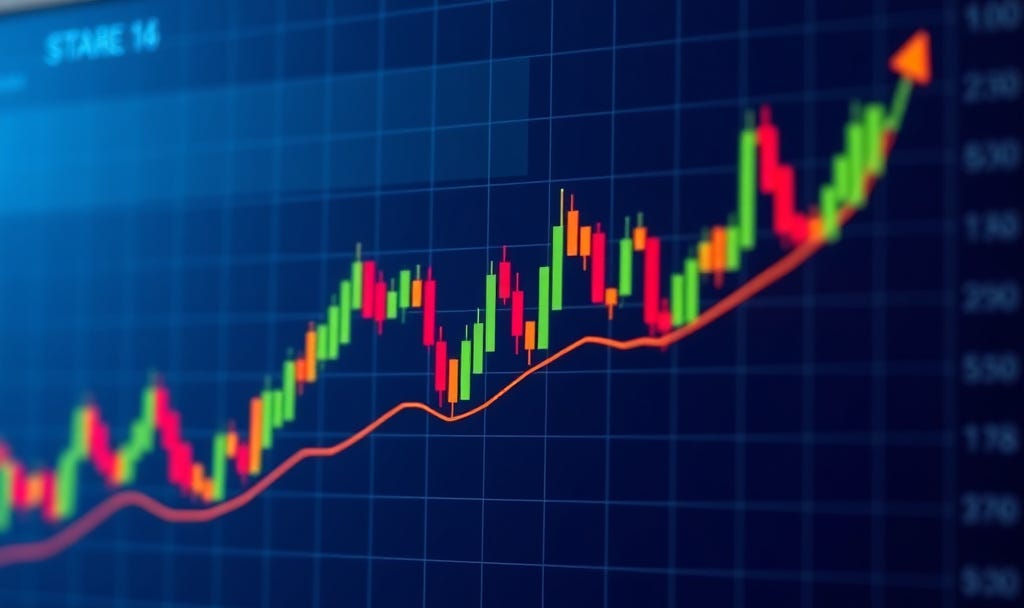

Most trading frustration comes from one simple mistake: using the right strategy in the wrong market phase.
Markets are not always trending. They are not always choppy. They rotate between periods of expansion and consolidation, and those shifts dictate which strategies work, which fail, and which quietly bleed an account.
If you do not understand whether the market is expanding or consolidating, you are trading blind.
What Expansion and Consolidation Actually Mean
At a high level, markets move in two dominant states. They either move away from value or around value. That is the simplest way to think about it.
Expansion Phase
Expansion is directional movement.
Characteristics include:
Strong trends
Higher highs and higher lows or lower lows and lower highs
Increasing volatility
Breakouts that hold
Shallow pullbacks
Momentum continuation
This is where most traders make money when they are aligned with direction.
Consolidation Phase
Consolidation is rotational movement.
Characteristics include:
Sideways price action
Failed breakouts
Mean reversion
Lower volatility
Overlapping candles
Frequent wicks
This phase exists so the market can rebalance positions, absorb liquidity, and prepare for the next expansion.
Why Markets Rotate Between These Phases
Markets expand when there is imbalance. Markets consolidate when that imbalance gets resolved.
Expansion happens because:
New information enters the market
Liquidity flows in one direction
Institutions reposition
Risk appetite shifts
Consolidation happens because:
Positions need to be absorbed
Buyers and sellers reach equilibrium
Volatility compresses
The market searches for fair value
Neither phase is good or bad. They are necessary. The problem arises when traders treat them the same.
Why Most Traders Struggle With These Phases
There are three common reasons.
1. Strategy attachment
Traders find something that works in expansion and assume it should work all the time.
When the market shifts into consolidation, the strategy stops working, and the trader assumes something is broken.
Nothing is broken. The environment changed.
2. Overtrading consolidation
Consolidation creates movement without progress.
Retail traders mistake activity for opportunity and overtrade small fluctuations, stacking losses while going nowhere.
3. Late recognition of expansion
Many traders hesitate during early expansion because it feels risky.
By the time they gain confidence, the move is already extended.
How to Identify Expansion vs. Consolidation
You do not need complex indicators. Price behavior tells the story.
Signs of Expansion
Breakouts follow through
Pullbacks are shallow
Volatility increases
Price moves cleanly between key levels
Trend days appear more frequently
When expansion is present, continuation setups outperform.
Signs of Consolidation
Breakouts fail quickly
Price overlaps previous candles
Volatility contracts
Price oscillates between the same levels
Liquidity grabs increase
When consolidation dominates, trend strategies struggle.
How Strategy Performance Changes by Phase
This is where consistency is found.
Expansion Phase Works Best For
ORB strategies
Trend following
Breakout continuation
Momentum trades
Holding winners longer
Expansion rewards patience and conviction.
Consolidation Phase Works Best For
Mean reversion
Liquidity sweeps
VWAP fades
Range trades
Faster profit taking
Consolidation rewards precision and restraint.
Why Volatility Is the Bridge Between Phases
Volatility is not random. It expands and contracts with the cycle.
Expanding volatility often signals the start of expansion
Contracting volatility signals consolidation
Sudden volatility spikes often mark transitions
If volatility does not support your strategy, your edge is already compromised.
How to Adjust Your Trading Based on Phase
This is where traders separate themselves.
1. Reduce size during consolidation
Smaller ranges mean smaller opportunity. Size should reflect that.
2. Be selective during expansion
Expansion does not mean trade everything. It means trade the best setups and let them work.
3. Expect fewer trades in consolidation
Consolidation is not a time to force action. It is a time to protect capital.
4. Accept transitions are messy
Phase transitions are where fakeouts live. Reduce expectations and size during these windows.
Why Phase Awareness Improves Psychology
Much of trading stress comes from misaligned expectations.
When you know the market is consolidating:
You stop chasing breakouts
You stop expecting trend behavior
You stop blaming yourself
When you know the market is expanding:
You give trades room
You hold winners longer
You avoid cutting gains early
Context reduces emotional noise.
Expansion and consolidation are not opposing forces. They are partners.
Markets expand to move price. Markets consolidate to prepare for the next move.
Traders who ignore this cycle feel like the market is inconsistent. Traders who respect it realize the market is actually very logical.
Once you stop asking, “Why isn’t my strategy working?” And start asking, “What phase is the market in?” Consistency becomes much easier to achieve.
*Disclaimer: Not Financial Advice. Investors should conduct thorough research and seek professional advice before making any investment decisions.