


Interest rates are one of the most talked about topics in financial media. Every rally, selloff, and sideways market seems to get blamed on them.
“Rates are going up.”
“Rates are staying higher for longer.”
“Rates are coming down soon.”
Retail traders hear these phrases constantly, but very few understand what they actually mean for price action.
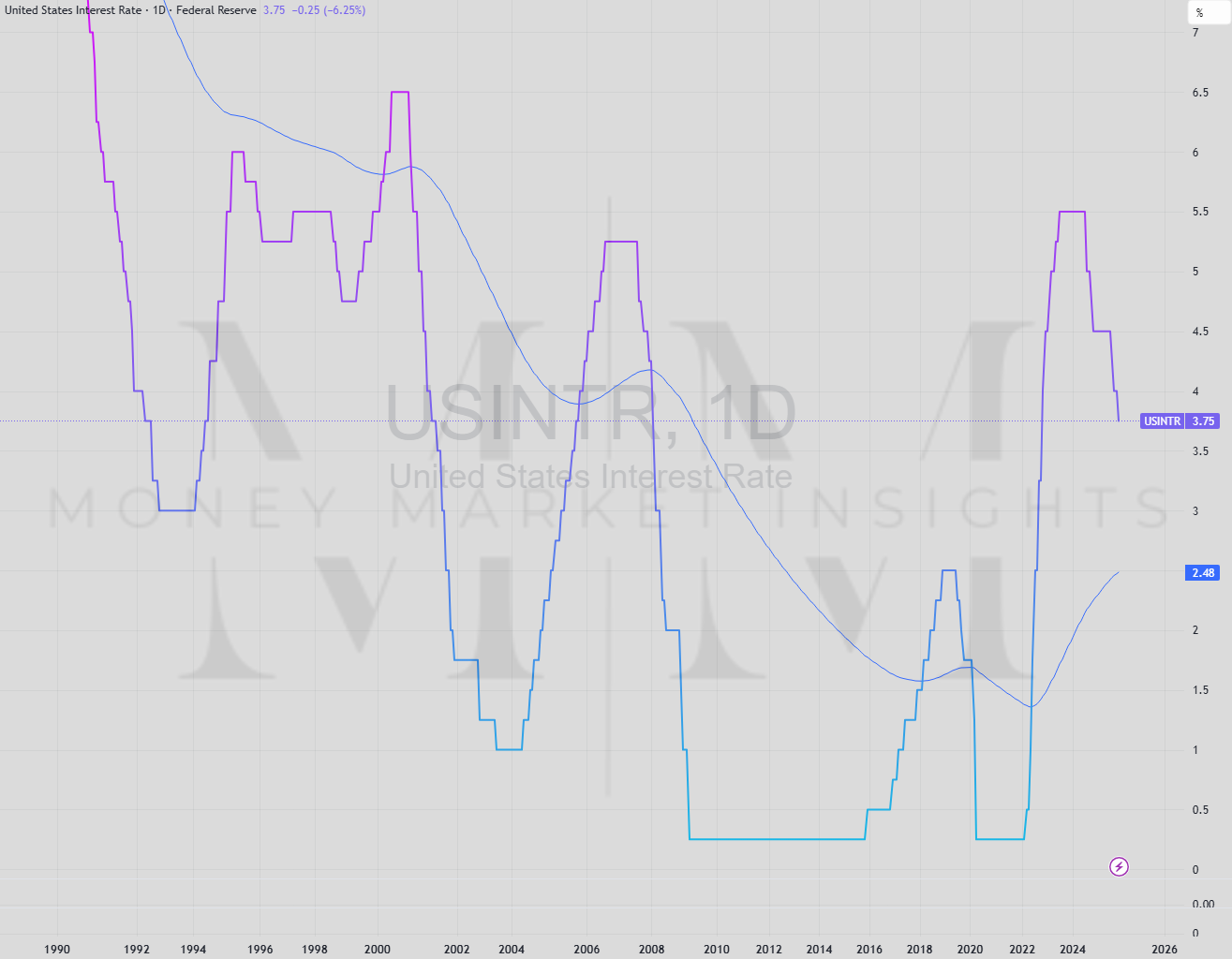
What Interest Rates Really Represent
Interest rates are the price of money.
When rates are low, borrowing is cheap. When rates are high, borrowing is expensive.
That sounds simple, but the real impact comes from how rates change behavior across the system.
Rates influence:
Corporate borrowing
Consumer spending
Investment flows
Valuations
Risk appetite
Liquidity availability
Stocks do not react to rates in isolation. They react to how rates affect liquidity and expectations.
Why Stocks Do Not Move One-to-One With Rates
A common retail assumption is:
Rates up = stocks down
Rates down = stocks up
Reality is far more nuanced.
Markets move on expectations, not just outcomes.
If rate hikes are expected and already priced in, stocks may rally when rates rise. If cuts are expected and fail to happen, stocks can sell off even when rates stay flat.
The market trades surprise, not headlines.
The Timing Problem Most Retail Traders Miss
Rates affect stocks on different timelines.
Short Term
Rate decisions create volatility, not trend.
You often see:
Initial spikes
Fakeouts
Reversals
Whipsaws
This is why trading directly off rate headlines is dangerous.
Medium Term
This is where rates begin to influence:
Sector rotation
Valuation adjustments
Earnings expectations
Growth stocks, rate sensitive sectors, and leveraged companies start to diverge.
Long Term
Sustained rate regimes shape:
Bull and bear markets
Capital allocation
Risk tolerance
Market cycles
This is where the real impact shows up.
How Interest Rates Affect Stock Valuations
One of the most important concepts for traders to understand is discounting.
Stocks are priced based on expected future cash flows. Interest rates affect how those future cash flows are valued today.
When rates rise:
Future earnings are discounted more heavily
High growth stocks suffer more
Valuations compress
When rates fall:
Future earnings become more valuable
Growth stocks benefit
Valuations expand
This is why technology stocks are often more sensitive to rate changes than defensive sectors.
Why Some Stocks Go Up Even When Rates Rise
This confuses many traders.
Stocks can rise during rate hikes when:
Economic growth remains strong
Earnings continue to expand
Inflation expectations stabilize
Rate hikes are slow and predictable
In these cases, rising rates signal confidence in the economy rather than stress.
The context matters more than the rate itself.
Sector-Level Effects of Interest Rates
Rates do not impact all stocks equally.
Sectors That Tend to Struggle With Higher Rates
Technology
High growth stocks
Unprofitable companies
Highly leveraged firms
These rely heavily on future earnings and cheap capital.
Sectors That Can Benefit From Higher Rates
Financials
Energy
Industrials
Value oriented stocks
Banks, in particular, can benefit from wider interest margins.
Rate Cuts Are Not Always Bullish
Rate cuts often occur during economic stress.
When cuts happen because growth is slowing, stocks can fall despite lower rates. This catches many retail traders off guard.
Again, the reason behind the rate change matters more than the change itself.
How Interest Rates Affect Market Phases
Rates play a major role in market cycles.
Rising rates often coincide with consolidation or late expansion
Falling rates can fuel new expansion phases
Rapid rate changes often increase volatility and transitions
This is why rate environments must be viewed through a market cycle lens, not a single trade lens.
How Retail Traders Should Actually Use Rate Information
This is where things get practical.
1. Use rates for context, not entries
Rates help you understand the environment. They do not give precise buy or sell signals.
2. Watch expectations, not headlines
What the market expects matters more than what the central bank says.
Surprises move price. Confirmations often do not.
3. Combine rates with price action
Price always has the final say.
If stocks rally despite bad rate news, that information matters.
4. Respect volatility around rate events
Rate announcements distort normal price behavior. Reduce size or sit out if needed.
5. Think in phases, not days
Rates influence markets over weeks and months, not minutes.
Align your strategy with the broader environment.
Common Retail Mistakes Around Interest Rates
Trading headlines instead of structure
Assuming rate cuts are always bullish
Ignoring expectations
Overreacting to short term volatility
Treating macro as a timing tool
Macro is a compass, not a stopwatch.
Interest rates matter, but not in the way most retail traders think.
They shape liquidity, expectations, and market phases over time. They do not hand you instant trade signals.
When you stop reacting to rate headlines and start using rates as context, your decision making becomes calmer, clearer, and far more effective.
Understand the environment first. Trade the structure second. Let price do the talking.
*Disclaimer: Not Financial Advice. Investors should conduct thorough research and seek professional advice before making any investment decisions.