

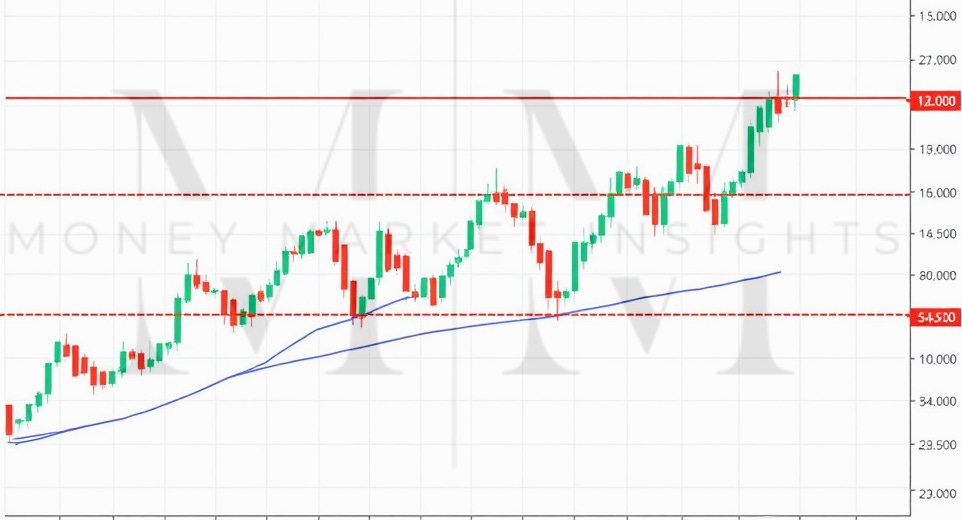

Every chart is a battlefield. Most traders focus on patterns, indicators, and signals, but professionals focus on one thing above everything else: liquidity. If you can identify where liquidity sits on a chart, you can predict where price will move, where it will react, and where smart money is likely to show up.
Liquidity zones are the heartbeat of market structure. They tell you where traders are positioned, where stops are hidden, and where institutions have the ability to push price with minimal resistance. Once you start trading liquidity instead of random candles, everything becomes clearer.
This guide shows you how to spot liquidity zones, how smart money interacts with them, and how to use them to build a more consistent trading approach.
What Liquidity Actually Means
Liquidity is not volume. Liquidity is the availability of orders at a given price.
When liquidity is high, price can move smoothly. When liquidity is low, price jumps or spikes.
Smart money seeks liquidity for two reasons:
They need liquidity to enter and exit large positions without moving price too much.
They use liquidity pockets to manipulate price, trigger stops, and create clean entries.
If you want to understand institutional behavior, you need to understand where liquidity hides.
Where Liquidity Lives on a Chart
Liquidity tends to cluster in predictable places. These zones act as magnets for price because that is where the largest pools of orders sit.
1. Previous Highs and Lows
This is one of the most reliable liquidity areas in all markets.
Traders place stops just beyond previous highs or lows
Breakout traders place buy or sell stop orders above or below these levels
Institutions know both sides are waiting
This creates a dense pocket of liquidity.
2. Opening Price and Closing Price
These prices anchor market participants:
Opening price reflects short term sentiment
Closing price reflects institutional positioning
Both become liquidity magnets the next session
When price returns to either level, expect a reaction.
3. Consolidation Zones
Sideways ranges create compression.
Inside these zones:
Traders build positions
Stops accumulate outside the range
Institutions accumulate or distribute quietly
The edges of consolidation zones hold significant liquidity.
4. Key Levels and Pivot Points
Pivot Points, R1 and S1, Median, and any well recognized level attract orders.
Even if the level itself is not magical, the behavior around it is.
These levels create structure and liquidity simply because the market expects them to.
5. Imbalances and Fair Value Gaps
Gaps form when one side dominates the other.
When price returns to fill the gap:
Liquidity is restored
Smart money often enters or exits in these areas
Volatility settles
Gaps are not random mistakes. They reflect temporary liquidity vacuums.
How Smart Money Uses Liquidity Zones
Institutions do not chase price. They pull price toward liquidity. Smart money activity typically follows a three step pattern.
Step 1: Seek Liquidity
Price moves toward areas where stops and pending orders sit.
This is why markets often:
Wick previous highs
Tap below lows
Retest a level before reversing
Run through an obvious breakout level before snapping back
The goal is simple. Smart money wants to activate the orders they need to fill their positions.
Step 2: Absorb Liquidity
When liquidity is triggered, smart money fills positions quietly.
You will recognize absorption when:
Price moves into a zone and stalls
Volume rises but candles stop progressing
Long wicks form on both sides
The market feels “sticky” at that level
This is where institutions enter or exit.
Step 3: Push Price in the Real Direction
Once their orders are filled, smart money moves price efficiently.
The real move comes after:
Stop hunts
Fake outs
Breakout traps
Liquidity grabs
Retail traders often enter during the manipulation. Professionals enter after it.
How to Spot Liquidity Grabs in Real Time
You can identify a liquidity grab using a simple checklist.
1. Did price run above or below a key level?
Previous highs and lows are the most common targets.
2. Was the breakout weak?
Low volume or immediate rejection is a red flag.
3. Did a wick form quickly?
Long wick equals aggressive absorption.
4. Did the next candle close back inside structure?
This is your confirmation. This is the signature of a liquidity sweep.
Why Liquidity Zones Improve Your Trading
Trading becomes easier when you stop guessing where price might go and start identifying where price needs to go.
Liquidity zones help you:
Avoid chasing breakouts
Catch reversals with confidence
Identify high probability continuation areas
Recognize institutional behavior
Reduce random trades
Improve stop placement
Find better targets
You start trading intention instead of reaction.
How to Use Liquidity Zones in Your Strategy
Here is the MMI approach.
1. Mark liquidity zones before the session
At minimum:
Previous day’s high and low
Opening and closing price
Consolidation areas
Pivot levels
Clear gaps or imbalances
This gives you a complete roadmap.
2. Combine liquidity with Key Price Levels
When a liquidity zone overlaps with a KPL, the level becomes significantly more powerful. These confluence zones produce the cleanest entries and exits.
3. Pair liquidity with ORB
Liquidity grabs often occur just before or just after the opening range forms.
Examples:
Break above ORH, immediate wick, reversal
Sweep below ORL, reclaim, trend day begins
Liquidity grabs leading into expansion phases
Liquidity is often the prelude to the real move.
4. Use liquidity placement to build your risk profile
Stops should sit:
Beyond liquidity pools, not inside them
Outside structural edges
Beyond obvious trap zones
Targets should aim for the next liquidity pocket.
Liquidity zones reveal the true structure of the market. They show you where the money is, where the traps are, and where institutions make decisions. When you learn to spot liquidity instead of chasing indicators, your trading becomes clearer, calmer, and far more strategic.
Trading becomes less about predicting the next candle and more about understanding where the market is inevitably drawn.
Identify liquidity. Let price come to you. Trade the reaction, not the illusion.
*Disclaimer: Not Financial Advice. Investors should conduct thorough research and seek professional advice before making any investment decisions.