


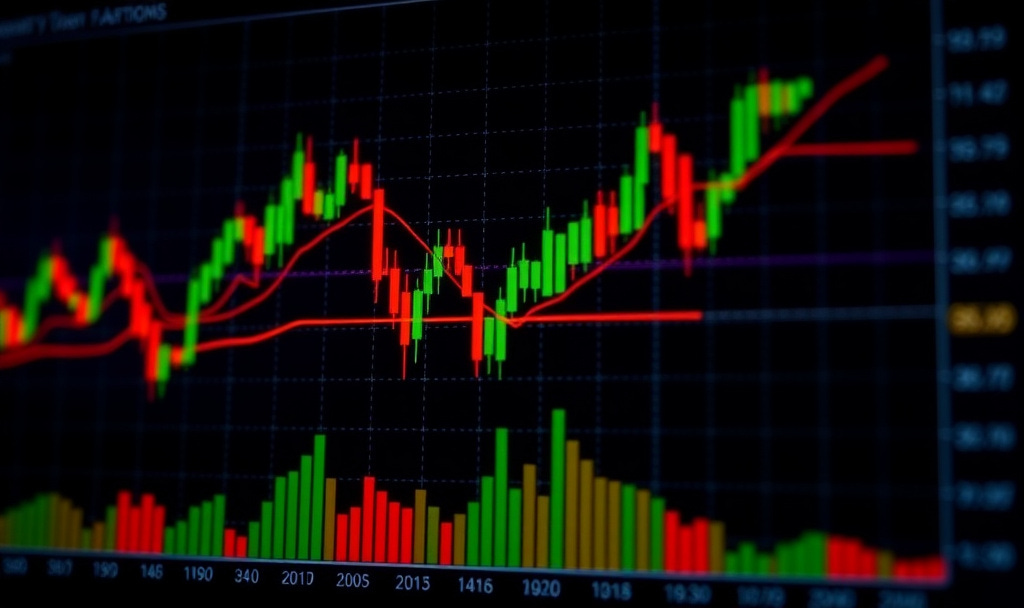

Most traders use indicators to find entries.
That is the wrong job.
Indicators are best used to confirm conditions, not predict outcomes. When traders treat indicators as signals, charts become cluttered, decisions become slower, and confidence erodes.
The goal is not to find the perfect indicator. The goal is to confirm whether a trend environment is worth participating in.
Why Indicators Are Misused
Retail traders are taught to stack indicators until something lines up.
MACD, RSI, stochastic, moving averages, oscillators, volume tools. Eventually, something flashes green.
The problem is that indicators are:
Lagging
Derived from price
Often redundant
More indicators do not equal more information. They often measure the same thing in different ways.
Trend confirmation requires clarity, not confirmation bias.
What Trend Confirmation Actually Means
Trend confirmation answers one question:
Is continuation more likely than rotation right now?
It does not answer:
Where price will go
How far it will move
When to enter
Trend confirmation simply tells you whether trend-based execution makes sense.
That alone eliminates many bad trades.
The Only Categories That Matter
Almost all useful trend confirmation indicators fall into three categories:
Trend direction
Momentum
Participation
If an indicator does not help with one of these, it is probably unnecessary.
1. Moving Averages (Used Properly)
Moving averages are simple and effective when used correctly.
Their job is not to predict reversals.
Their job is to define directional bias.
Common approaches:
Price above a rising average suggests bullish conditions
Price below a falling average suggests bearish conditions
The 20, 50, and 200-period averages are commonly used, but the exact length matters less than consistency.
What matters most is slope, not price touching the line.
2. Momentum Indicators (Confirmation, Not Timing)
Momentum indicators help determine whether a move has strength.
Examples include RSI or MACD, but they should be interpreted carefully.
Useful observations:
Higher highs in momentum during price advances
Sustained momentum above neutral levels
Momentum holding during pullbacks
Momentum divergence can be informative, but it is often premature.
Momentum confirms conditions. It does not issue commands.
3. Volume and Participation
Trends without participation are fragile.
Volume helps answer:
Is this move attracting interest?
Is participation expanding or contracting?
Rising volume during trend continuation supports conviction. Declining volume suggests exhaustion or rotation.
Volume is especially important during breakouts and ORB scenarios.
What to Avoid
Some common indicator mistakes include:
Using oscillators in strong trends to fade moves
Treating indicator crossovers as entries
Stacking multiple indicators that measure the same thing
Constantly changing indicator settings
Indicators should reduce uncertainty, not create debate.
Why Fewer Indicators Work Better
When traders use too many indicators, execution slows.
Hesitation increases.
Second-guessing creeps in.
Trades are missed or forced late.
A clean chart supports decisive execution.
Most professional traders rely on price, structure, and one or two confirmation tools at most.
Why Indicators Should Never Be Used Alone
An indicator without context is meaningless.
Indicators must be interpreted alongside:
Market phase
Structural levels
Rotational behavior
Volatility conditions
This prevents overconfidence and false signals.
A Simple Trend Confirmation Checklist
Before trading trend continuation, ask:
Is price aligned with higher timeframe structure?
Is direction clear on moving averages?
Is momentum supportive?
Is participation present?
If multiple answers are no, trend trades are lower quality.
Indicators are tools, not answers.
They work best when they confirm what price and structure are already suggesting. When used sparingly, they add confidence and clarity. When overused, they create noise and hesitation.
Trend confirmation is not about being right early. It is about avoiding low-quality environments.
That alone improves results more than any new indicator ever will.
*Disclaimer: Not Financial Advice. Investors should conduct thorough research and seek professional advice before making any investment decisions.